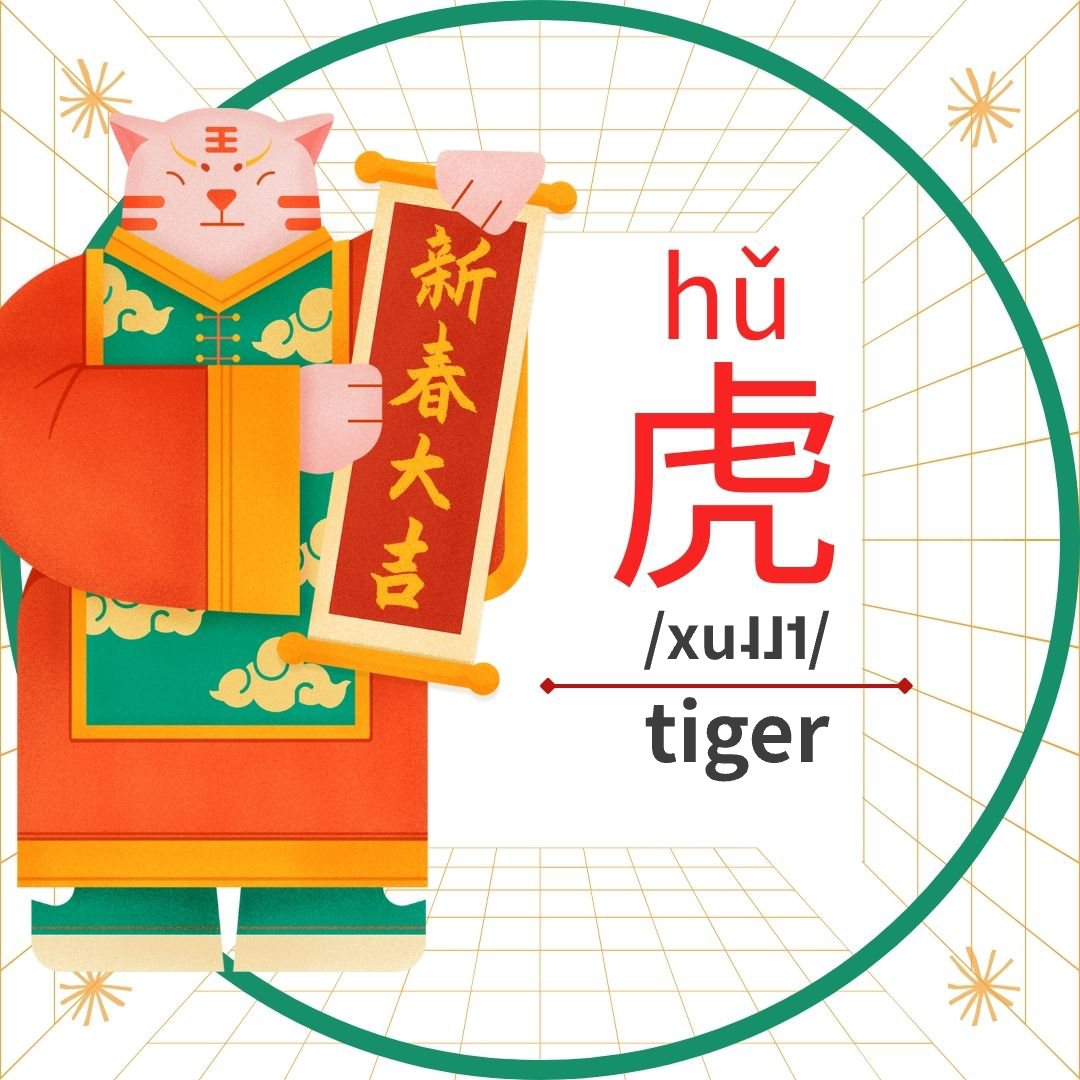
[Traditional Culture] The Legend of the Tiger in the Zodiac
According to ancient Chinese folklore, the Tiger earned its place as the third animal in the zodiac through a combination of raw power, bravery. Here’s the story:
The Jade Emperor organized a race across a treacherous river to determine the order of the zodiac.
The Tiger, known as the "King of Beasts," was confident in its strength and speed. However, the raging currents tested even its mighty prowess.
As the Tiger fought against the violent waters, it encountered obstacles like whirlpools and hidden rocks.
Despite its exhaustion, the Tiger’s unyielding courage and determination drove it forward. Legend says its roar shook the heavens, earning the gods’ admiration.
The Tiger finally reached the shore, but the clever Rat and steadfast Ox had already claimed first and second.
The Jade Emperor praised the Tiger’s bravery, declaring it the guardian of humanity and awarding it third place in the zodiac.
Power and Protection: The Tiger symbolizes strength, courage, and authority. In Chinese culture, it is revered as a protector against evil spirits and misfortune.
Yin-Yang and Elements:
Associated with the "Yin" hour (3:00–5:00 AM), a time when tigers are most active in the wild.
Tiger years (e.g., 2022, 2034) combine with the Wood element, representing growth, ambition, and resilience.
While the Tiger embodies ferocity, it also represents justice and nobility—traits celebrated in myths and art.
Personality Traits: Those born in Tiger years are said to be bold, charismatic, and adventurous, though sometimes impulsive. A famous saying goes: "A Tiger’s heart is never timid."
Mythology and Art: Tigers appear in countless legends, such as the White Tiger (白虎), one of the Four Celestial Guardians representing the West and autumn. They are also a popular motif in traditional paintings, symbolizing power and prosperity.
Festivals and Folklore: During Lunar New Year, tiger imagery wards off evil. Children wear tiger-head hats and shoes for protection, reflecting the animal’s role as a cultural talisman.
Fun Facts
In some regional tales, the Tiger’s stripes were earned during the race—scars from battling the river’s demons.
The phrase "如虎添翼" ("like a tiger with wings") describes someone gaining unstoppable power. 🐅✨
