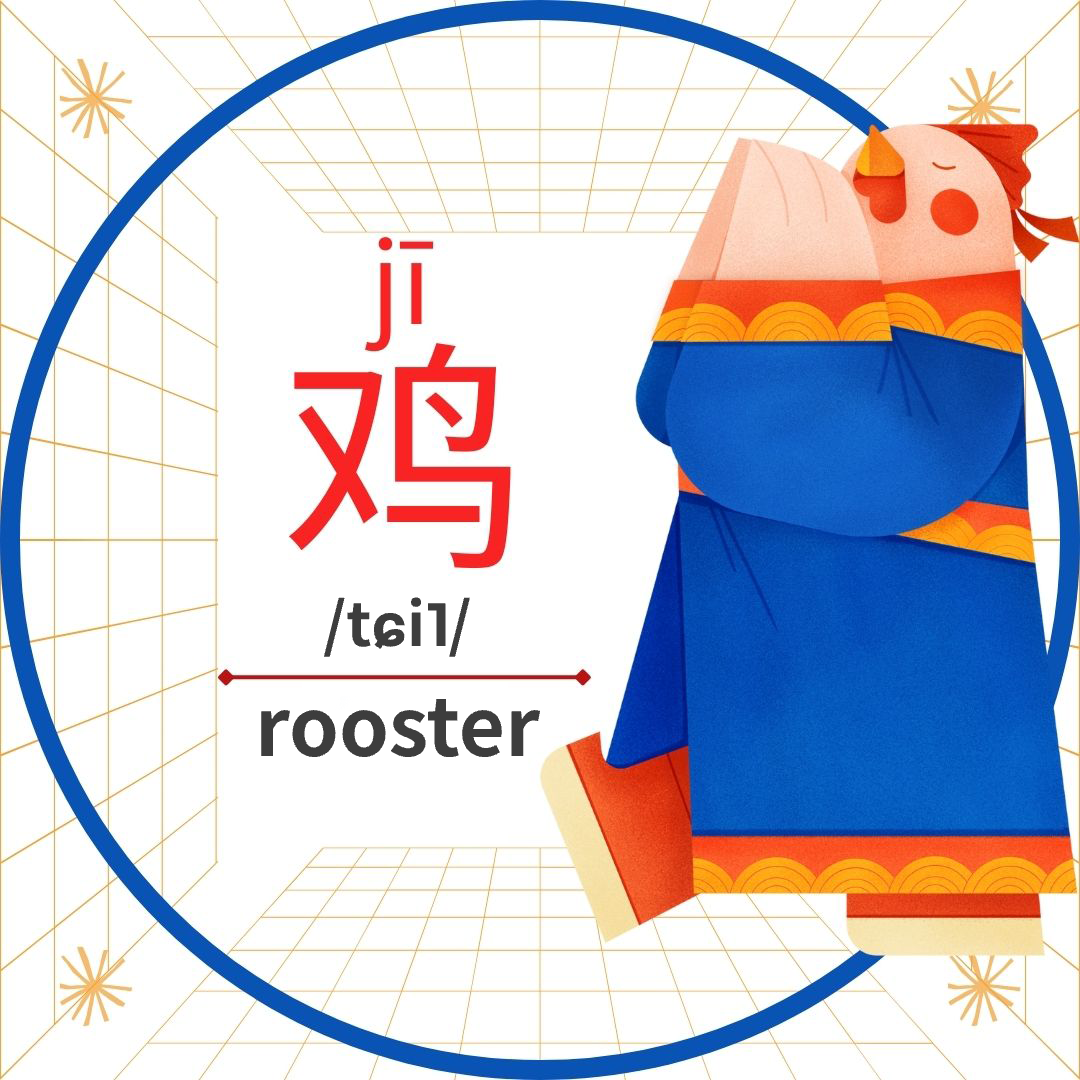
[Traditional Culture] The Legend of the Rooster in the Zodiac
The Celestial Race and the Rooster’s Sacrifice
According to folklore, the Jade Emperor’s zodiac race was not just a test of speed but also of wisdom and cooperation. The Rooster’s journey highlights its unique role: The River Crossing Challenge: The race required crossing a wide river. The Rooster, though a poor swimmer, teamed up with the Goat and Monkey.
Building a Raft: The Monkey gathered reeds, the Goat steadied the raft, and the Rooster used its sharp beak to tie knots, securing the structure.
A Selfless Gesture: As the trio neared the shore, the Rooster let the Goat and Monkey step off first, prioritizing teamwork over personal glory. The Jade Emperor, moved by its humility, awarded the Rooster tenth place.
This story emphasizes the Rooster’s pragmatism and sense of duty, even at the cost of a higher rank.
Another myth ties the Rooster to the sun and timekeeping:
Ancient Chinese believed the Rooster’s crow at dawn had divine power, driving away darkness and evil spirits.
In legends, a Golden Rooster (金鸡) was said to live in the heavens, its crow marking the transition between yin (night) and yang (day).
Symbolism of the Rooster
Punctuality and Discipline: The Rooster symbolizes reliability, hard work, and order. Its daily crow embodies the Confucian value of ritual propriety (礼, lǐ).
Yin-Yang and Elements:
Linked to the "You" hour (5:00–7:00 PM), a time when roosters return to their coops, symbolizing completion and reflection.
Rooster years (e.g., 2017, 2029) align with the Metal element, enhancing traits like precision, ambition, and resilience.
Cultural Duality: While admired for its confidence (as in the phrase “proud as a rooster”), it can also symbolize vanity or quarrelsomeness.
Personality Traits: Those born in Rooster years are said to be observant, organized, and outspoken, though occasionally perfectionist or critical.
Art and Festivals:
Rooster motifs adorn New Year paintings and ceramics, symbolizing prosperity. Red paper roosters are hung to ward off misfortune.
In Peking opera, the Rooster’s crest-inspired headdresses represent vigilance and nobility.
Linguistic Play: The word for “rooster” (鸡, jī) sounds like “luck” (吉, jí), making it a popular symbol for blessings.
Fun Facts
The idiom “闻鸡起舞” (Wén jī qǐ wǔ)—“Rise at the rooster’s crow to practice swordplay”—praises diligence and self-improvement. 🐓✨
